Research Project · Published · ASSETS 2024
SMART-TBI: Design and Evaluation of the Social Media Accessibility and Rehabilitation Toolkit for Users with Traumatic Brain Injury
Abstract
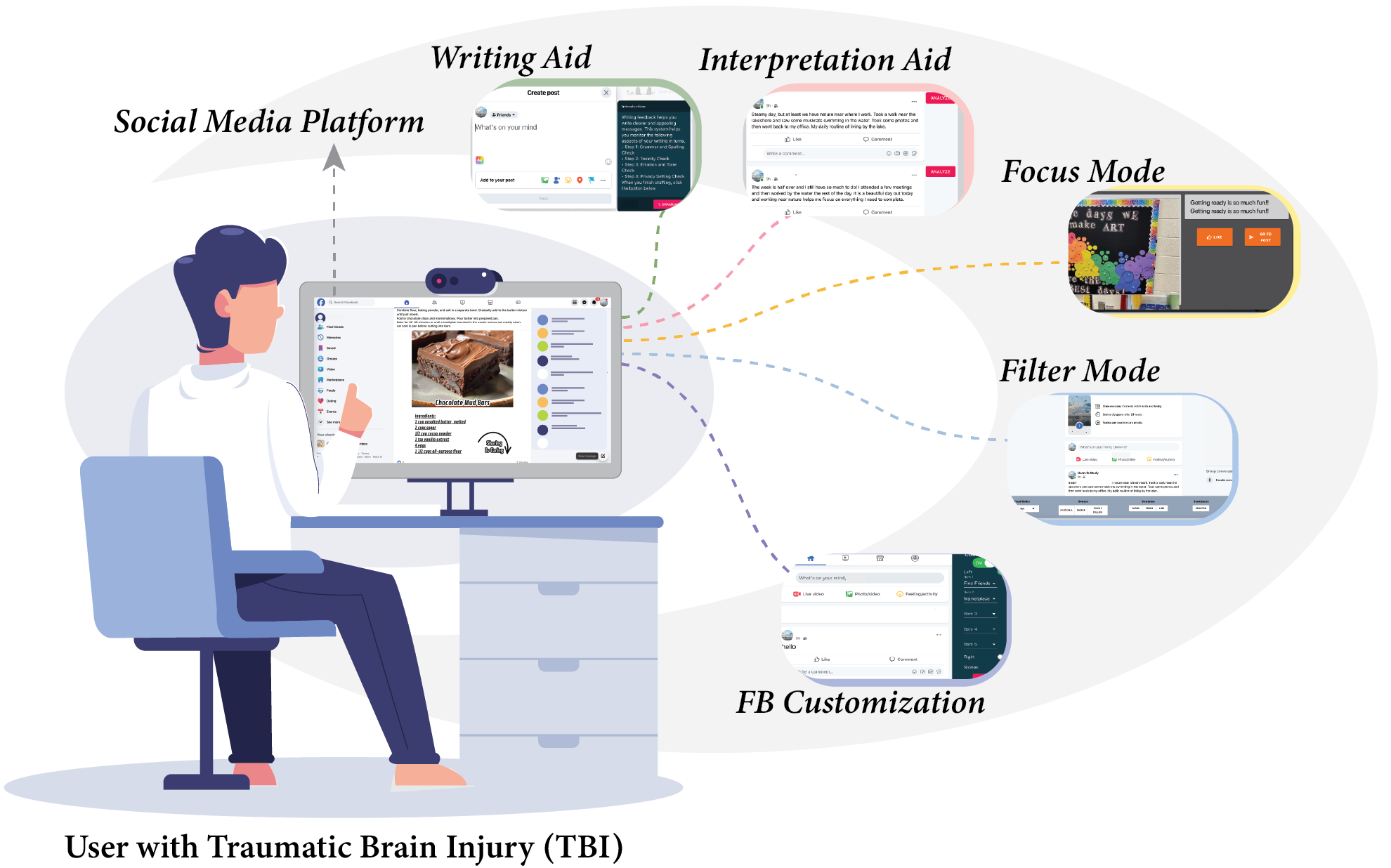
Traumatic brain injury (TBI) can cause a range of cognitive and communication challenges that negatively affect social participation in both face-to-face interactions and computer-mediated communication. In particular, individuals with TBI report barriers that limit access to participation on social media platforms. To improve access to and use of social media for users with TBI, we introduce the Social Media Accessibility and Rehabilitation Toolkit (SMARTTBI). The toolkit includes five aids (Writing Aid, Interpretation Aid, Filter Mode, Focus Mode, and Facebook Customization) designed to address the cognitive and communicative needs of individuals with TBI. We asked eight users with moderate-severe TBI and five TBI rehabilitation experts to evaluate each aid. Our findings revealed potential benefits of aids and areas for improvement, including the need for psychological safety, privacy control, and balancing business and accessibility needs; and overall mixed reactions among the participants to AI-based aids.Brain injuries can affect thinking and communication in ways that make social media harder to use. We created SMART-TBI, a toolkit with five tools: a Writing Aid to help compose posts, an Interpretation Aid to explain confusing messages, a Filter Mode to block upsetting content, a Focus Mode to reduce distractions, and a Facebook Customization option. We had eight adults with moderate-to-severe brain injuries and five rehabilitation specialists evaluate each tool. We found where the tools helped most and where they needed improvement, including the importance of privacy control and psychological safety, and we found mixed reactions to AI-based features.