Research Project
Social Robot Occupational Support Study
Overview
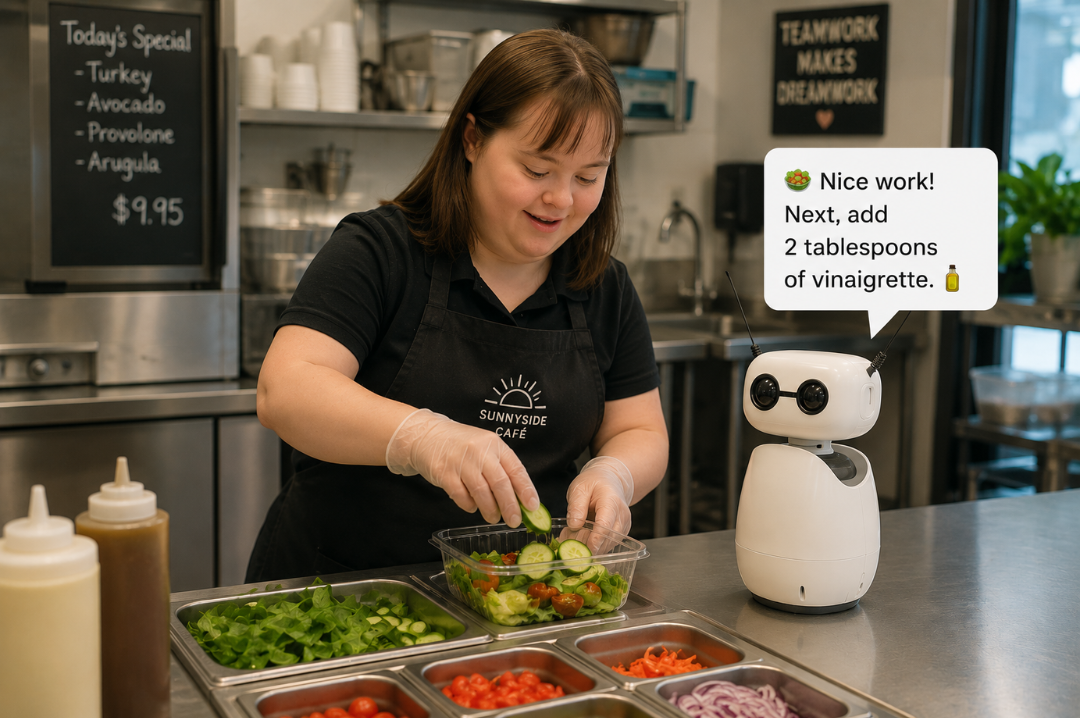
This project develops a social robot assistant, built on the Reachy Mini platform, to support adults with Intellectual and Developmental Disabilities (IDD) during occupational tasks. The robot is designed to function as a job-coach-like presence: helping a worker stay engaged with a task, offering step-by-step guidance when needed, and stepping back when it is not needed, rather than functioning as a trainer or performance evaluator. We are building a small robot called Reachy Mini that acts like a friendly job coach for adults with intellectual and developmental disabilities. The robot is designed to help with work tasks by giving step-by-step instructions and reminders, and to back off and let the worker do things on their own when they don't need help. The goal is for the robot to feel like a helpful coworker, not a teacher or a boss.
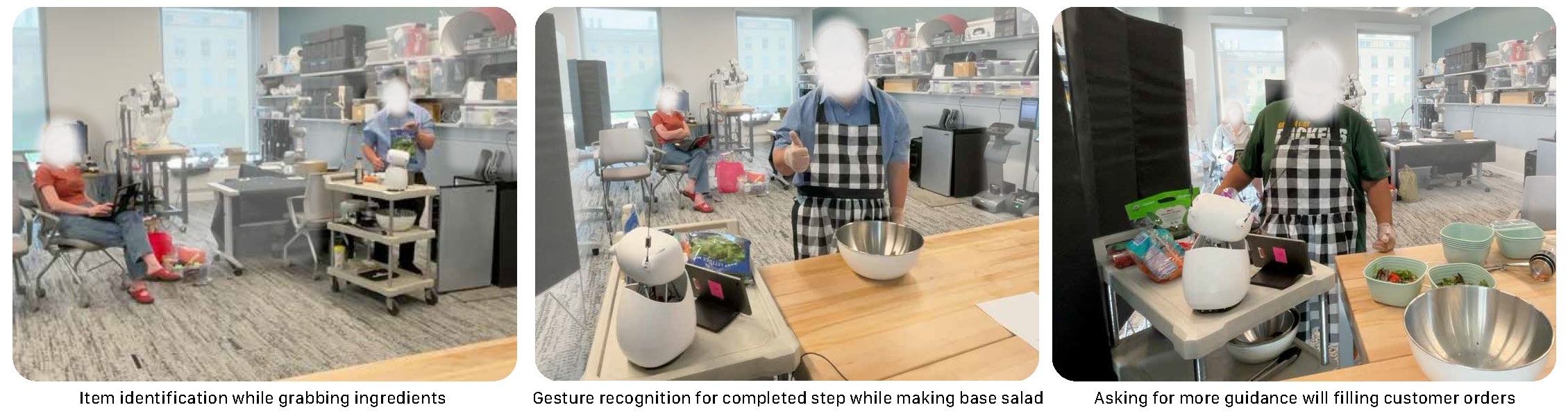
We are conducting a formative user study that explores (1) participants' existing job tasks and the help they currently receive from coworkers or job coaches; (2) how they interact with a robot assistant performing analogous support during lab-simulated tasks; and (3) what they want from such an assistant going forward. In parallel, we are interviewing job coaches to understand their perspective on robot-assisted support in occupational settings. We are running a study with adults with IDD and with job coaches. Participants will try out two work-like tasks with the robot's help, and we will ask them what worked, what felt uncomfortable, and what they'd want the robot to do differently. We are also talking with job coaches separately to get their perspective on robots supporting workers with IDD.
System Design
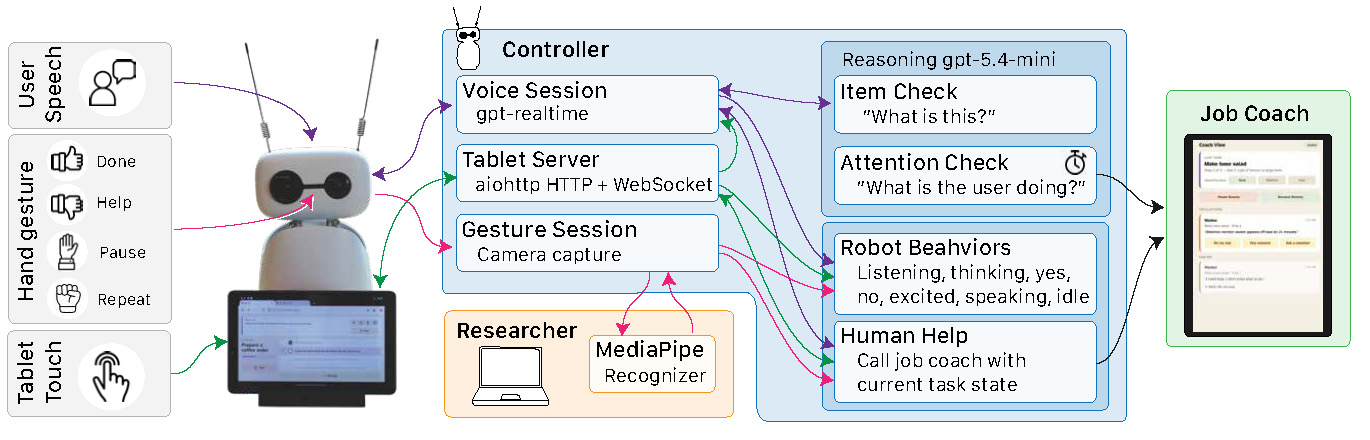
The robot assistant is built on the Reachy Mini platform, which is a small, tabletop-scale social robot with expressive face, antenna, and arm movements. The system supports multimodal communication including speech, simple gestures (e.g., hand-raise to pause, thumbs up/down), a companion tablet display, and expressive light and animation cues. The robot we're using is called Reachy Mini. It's small enough to sit on a table. It can talk and make gestures. We are making a tablet app the users can touch which will use lights and animations to communicate.
The robot is designed as one node in a collaborative environment rather than a standalone assistant. Workers and their job coaches can both update what Reachy knows: the worker verbally, the job coach through a companion app. If the robot encounters a question outside its context, it requests help from the job coach; the worker can also redirect to the job coach directly at any time. This reflects an interdependence model: the assistive technology supports the relationships and routines already in place, rather than replacing them. Workers can customize their task by adding, removing, or reordering subtasks, and graduated escalation keeps Reachy from intervening unprompted: it steps in only when the worker explicitly signals they are stuck, or when a period of inactivity is detected. Reachy is designed to be part of a team: the worker, the robot, and the job coach all work together. Workers can tell the robot when something changes; job coaches can update it through an app. If the robot doesn't know something, it can ask the job coach. The worker can also reach out to the job coach directly at any time. Workers can also customize their task by adding or removing steps, or doing things in a different order. The robot only steps in when the worker asks for help or when they seem to have stopped. It doesn't jump in on its own.
Research Questions
-
Preferred forms of assistance and relational role: What forms of assistance (timing, level of detail, modality, escalation style) do workers with IDD and job coaches consider appropriate versus unwelcome; and what relational role do they want the robot to occupy: buddy, co-worker, job coach, or supervisor? What kind of help do people want? What should the robot do when someone needs help, and how should it act? Should it feel more like a buddy, a coworker, a job coach, or a boss?
-
Expressive behavior and sociability: What role can expressive, multimodal robot behavior (voice, gesture, light, tablet, face and antenna) play in making assistance feel approachable; and how much sociability do participants actually want from the robot? How much personality should the robot have? Does it help when the robot uses a friendly voice, movements, and lights? Or does that feel like too much? How much personality do people actually want?
-
Interdependence and agency: How should the robot balance just-in-time support with user-initiated control to reflect an interdependence model that keeps worker agency central? Does the robot get in the way? How do we make sure the robot helps without taking over? How can the worker stay in charge of their own work?
-
Task engagement and perceived autonomy: How does the presence of a robot assistant affect a worker's task engagement, error recovery, and perceived autonomy during occupational tasks? How does the robot affect how people feel about their work? Does having the robot there help people stay focused and recover when something goes wrong? Do they still feel like they're in control?