Research Project · Published · ASSETS 2023
Conversational Agents for People with Traumatic Brain Injury (TBI)
Abstract
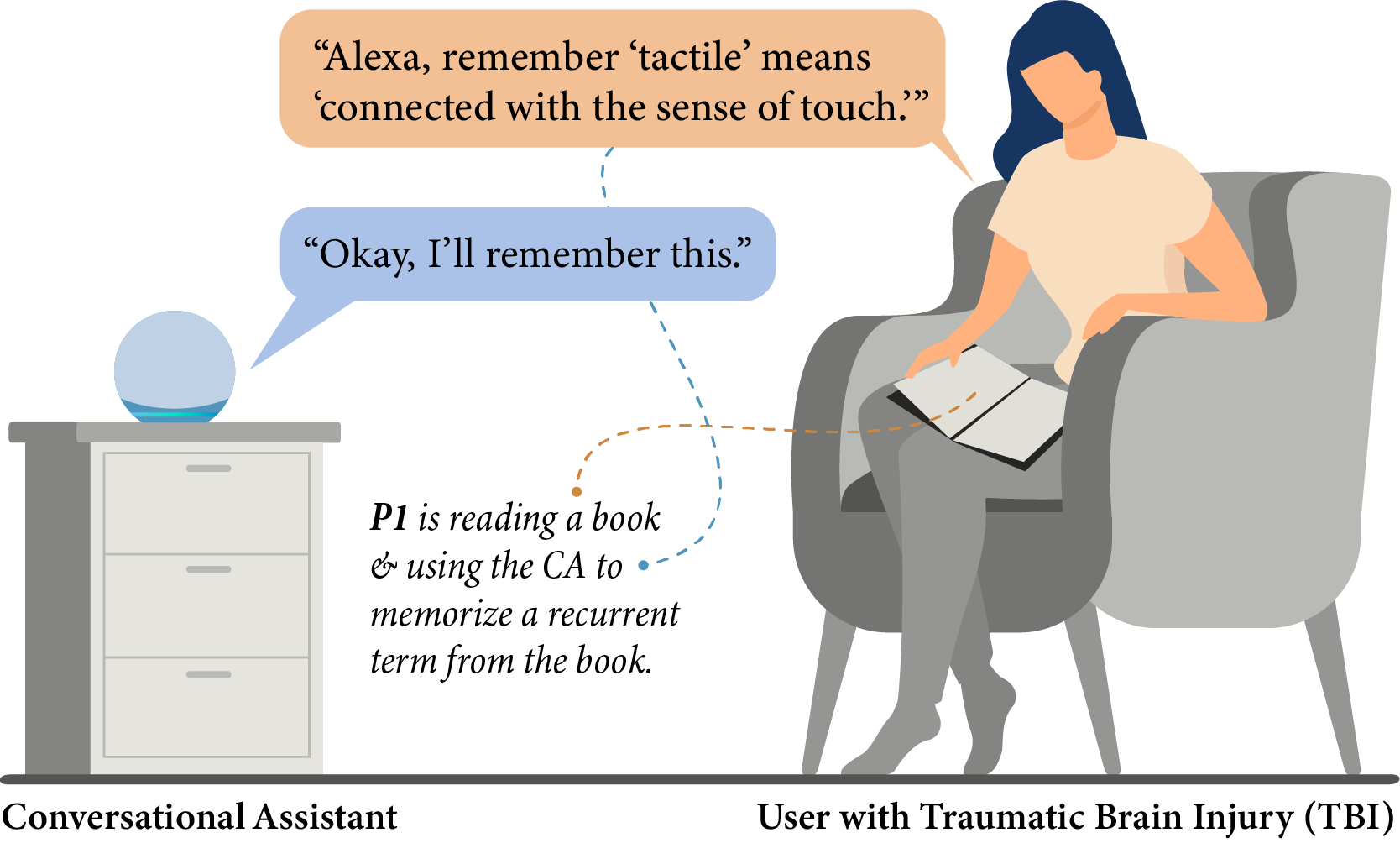
Traumatic brain injury (TBI) can cause cognitive, communication, and psychological challenges that profoundly limit independence in everyday life. Conversational Agents (CAs) can provide individuals with TBI with cognitive and communication support, although little is known about how they make use of CAs to address injury-related needs. In this study, we gave nine adults with TBI an at-home CA for four weeks to investigate use patterns, challenges, and design requirements, focusing particularly on injury-related use. The fndings revealed signifcant gaps between the current capabilities of CAs and accessibility challenges faced by TBI users. We also identifed 14 TBI-related activities that participants engaged in with CAs. We categorized those activities into four groups: mental health, cognitive activities, healthcare and rehabilitation, and routine activities. Design implications focus on accessibility improvements and functional designs of CAs that can better support the day-to-day needs of people with TBI.Brain injuries can affect memory, communication, and daily independence. Voice assistants, like Siri or Alexa, could help with some of these challenges, but we didn't know much about how people with brain injuries actually use them. We gave nine adults with brain injuries a voice assistant to use at home for four weeks. We found that current voice assistants often don't fully meet the accessibility needs of people with brain injuries. We identified 14 ways participants used the assistant for injury-related needs, grouped into mental health, thinking and memory, health and recovery, and daily routines, and we suggest changes to make voice assistants more accessible.